
Grass roots need air and water as much as they need nutrients. When soil gets packed down by foot traffic, mowers, play and construction, the pore space that holds air and lets water in collapses. Roots stay shallow, water runs off, and the lawn thins no matter how much fertilizer goes on top. Core aeration reverses some of that compaction, and overseeding into the fresh holes thickens the turf.
Why Lawn Soil Compacts
Clay-heavy soils compact most easily because their fine particles pack tightly. New-build lawns are often the worst, since heavy equipment drove over the subsoil before a thin layer of topsoil went on. Thatch, the mat of dead stems and roots between the green blades and the soil, adds to the problem when it builds up beyond about half an inch and starts shedding water.
A two-minute test
When the soil is moist, push a long screwdriver into the lawn in several places. If it slides in several inches easily, compaction is not your main issue. If it stops after an inch or two, aeration is likely to help. Cut a small wedge with a spade to see the thatch layer and how deep the roots go.
Timing by Grass Type
Aerate when the grass is actively growing so it can recover and fill the holes quickly. Overseeding follows the same calendar, since seed needs warm soil and the right air temperatures to establish.
| Lawn type | Best window | Why |
|---|---|---|
| Cool-season | Early fall, with spring as a second choice | Warm soil and cool air favor seedlings; fewer weeds compete |
| Warm-season | Late spring to early summer | The grass is growing hard and will close holes fast |
| Warm-season with winter rye | Fall, for the ryegrass overseed only | Temporary green cover while the base grass is dormant |
Avoid aerating during drought stress or heat waves, and avoid it right before or after applying a pre-emergent weed preventer if you also plan to seed.
Aerating and Overseeding the Right Way
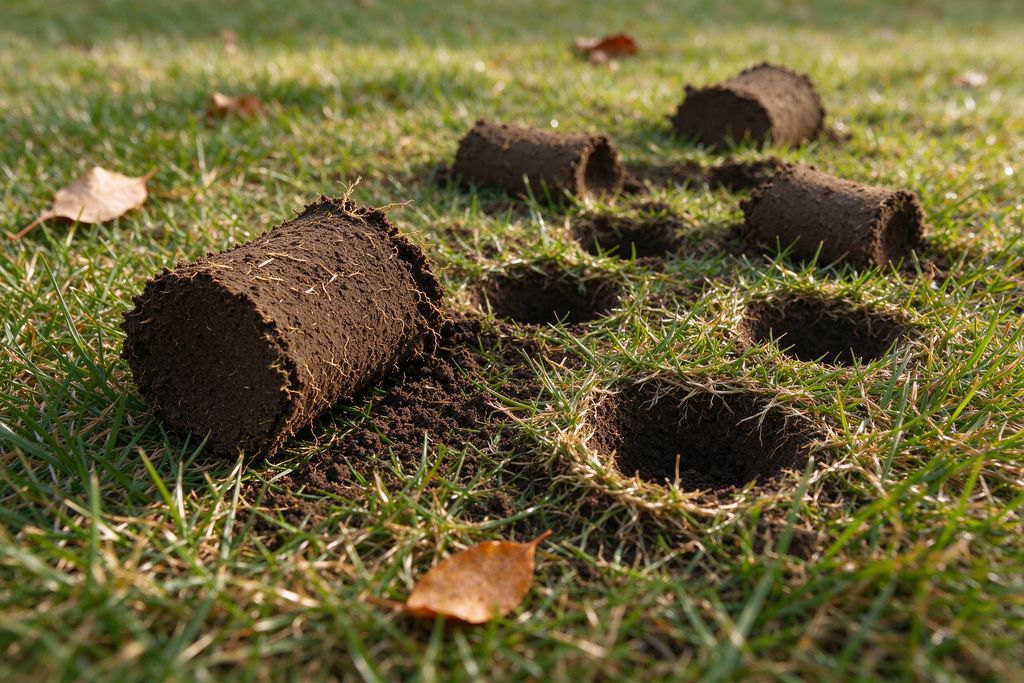
Get the soil moisture right
Water the lawn a day or two ahead, or aerate after a soaking rain. Tines pull clean plugs from moist soil; in dry clay they bounce, and in mud they smear the holes shut.
Use a core aerator
Hollow-tine core aerators remove plugs of soil and thatch. Solid spike tools are cheaper and lighter but mostly push soil sideways. On compacted lawns, two passes in crossing directions give better coverage.
Pick seed that matches the lawn
Overseed with the same type of grass already growing, or a blend suited to your sun and climate. Read the seed label: it lists the varieties, germination rate and weed seed content. Bargain bags often carry a higher share of filler and annual grasses.
Spread and settle
Spread half the seed in one direction and half at right angles. A light raking or drag mat helps seed settle into the holes. A thin top-dressing of compost over thin areas helps hold moisture.
Hiring someone to aerate? Ask whether the price includes marking irrigation heads, whether they use core or spike equipment, how many passes they make and whether seed is included and what variety. Those four answers separate a careful job from a fast one.
Aftercare That Makes It Work
New seed needs the top layer of soil to stay damp, which usually means short, frequent watering for the first couple of weeks until it germinates. After that, shift to longer, less frequent cycles that train deeper roots. A smart controller can automate this switch; see the irrigation guide.
the seed is washing into low spots,
shorten each watering cycle and add a second soak cycle instead.
germination is patchy after three weeks,
reseed the bare spots by hand and keep them damp.
water still runs off after aerating,
the compaction may be deeper; consider repeat aeration and compost top-dressing.
Hold off on heavy traffic until the new grass has been mowed a few times, and keep mowing height on the high side for your grass type. If the lawn is too far gone for overseeding, new sod may be faster; the sod installation guide explains the process.
Questions People Ask
Should I leave the soil plugs on the lawn?
Yes. The cores break down over a week or two with rain, irrigation and mowing, returning soil and microbes to the surface. Raking them up removes that benefit.
How often should a lawn be aerated?
It depends on soil and use. Heavy clay and high-traffic lawns may benefit every year; sandy, lightly used lawns far less often. A simple screwdriver test and a look at how water soaks in will tell you more than a calendar.
Is spike aeration as good as core aeration?
Generally no. Solid spikes push soil aside and can add compaction around each hole, while core aerators remove plugs and actually open space in the soil.
Can I overseed without aerating?
You can, but germination tends to be patchier because much of the seed lands on thatch or hard soil instead of in contact with loose soil. Aerating first, or using a slit seeder, gives seed somewhere to sit.
When can I mow after overseeding?
Wait until the new seedlings reach normal mowing height, then mow with a sharp blade when the grass is dry. Bag or avoid heavy traffic for the first few mows.
Do I need to use weed control after overseeding?
Many pre-emergent weed preventers also stop grass seed from germinating, so check the label before applying anything in the same season you seed.