
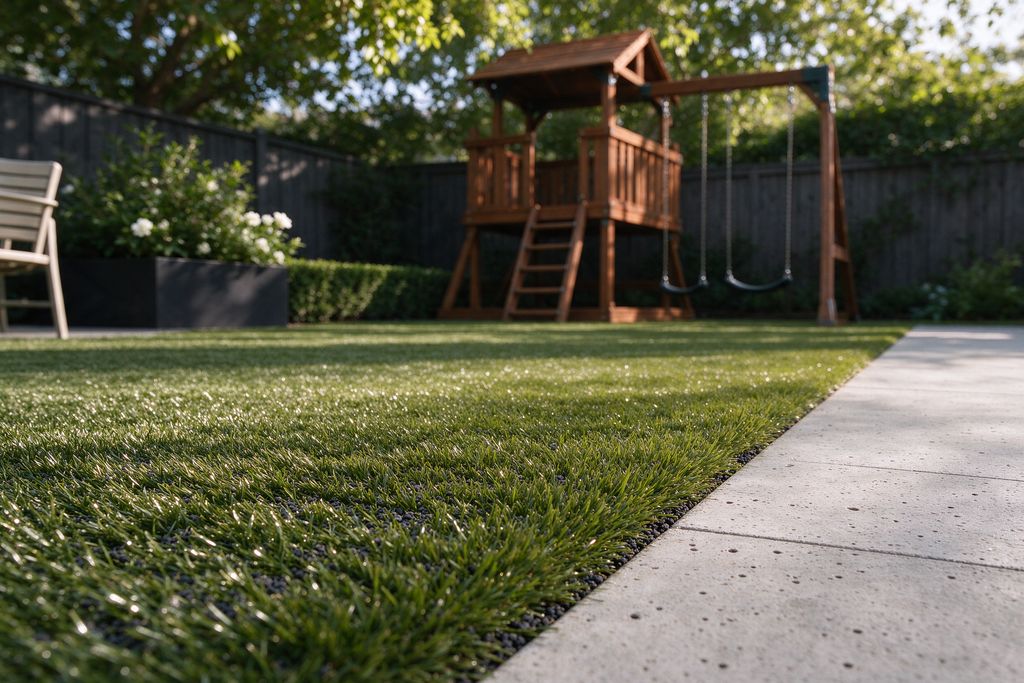
Heat
Synthetic fibers and rubber infills absorb sun. On a summer afternoon the surface can be far hotter than nearby grass, which cools itself by moving water through its leaves.
Independent turf information site, not a licensed contractor. Hire licensed, insured pros where your state or city requires it. Read the notice
Home / Natural Grass vs Artificial Turf
Comparison guide
Two very different surfaces that look alike from the street. One is a living system you manage, the other is a product you install and maintain. Here is how they compare where it matters.
Five deciding factors
Hover or tap each factor. These are the points that come up most when people compare the two surfaces.
Synthetic fibers and rubber infills absorb sun. On a summer afternoon the surface can be far hotter than nearby grass, which cools itself by moving water through its leaves.
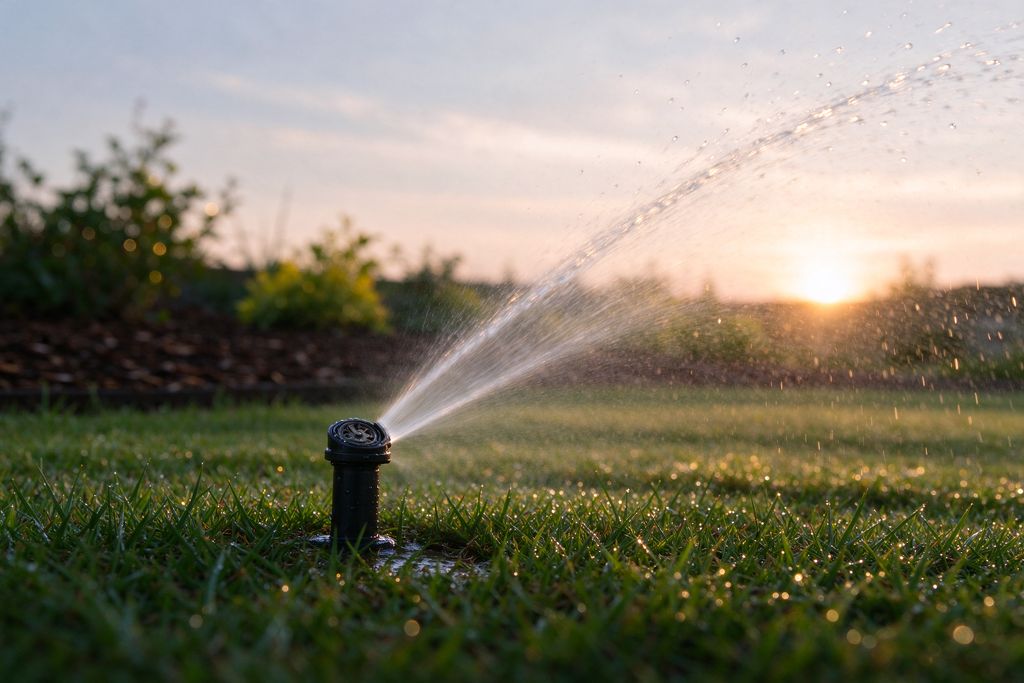
Grass needs regular irrigation in most climates. Synthetic turf needs far less, though pet areas and hot days still call for rinsing.
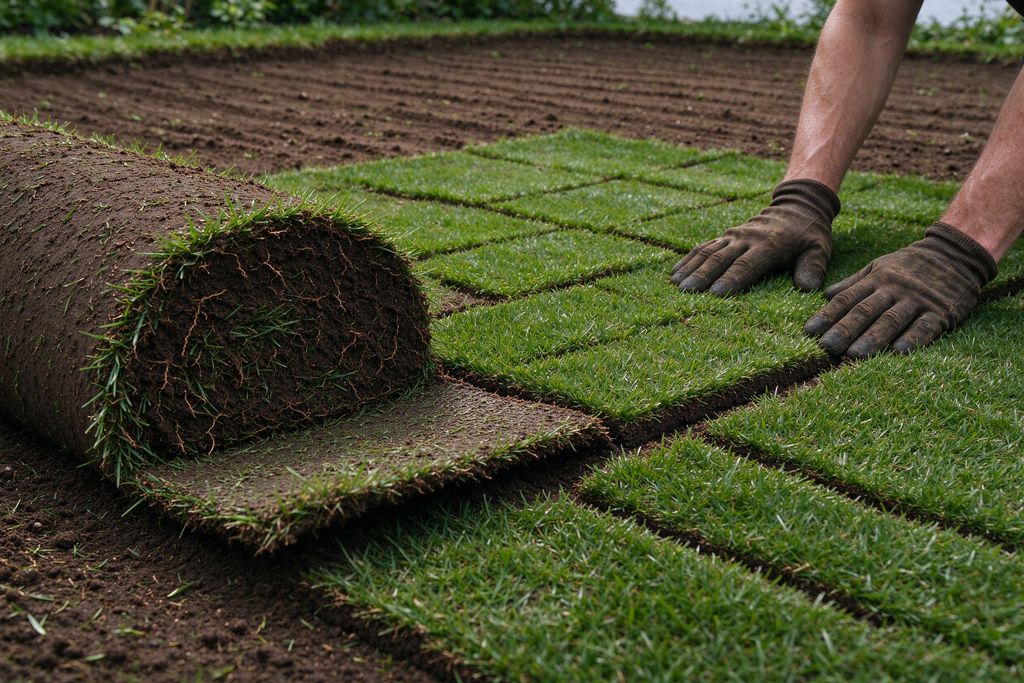
Grass drains through living soil and root channels. Synthetic turf drains through its backing and the compacted aggregate base beneath it.
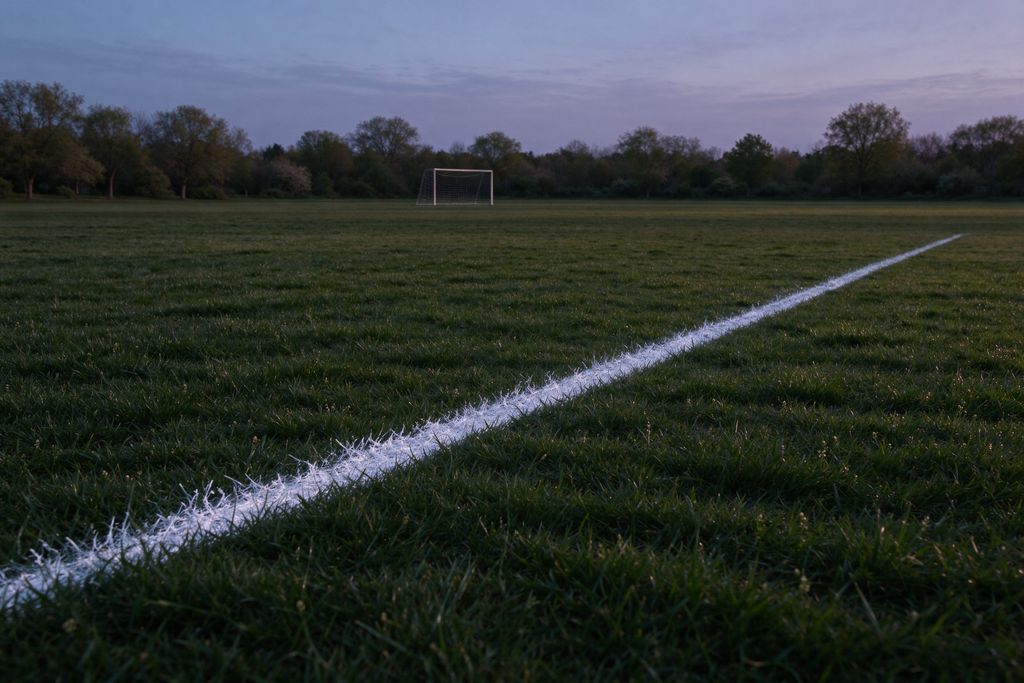
Grass repairs itself if it has time to recover. Synthetic turf takes constant traffic but flattens, fades and eventually has to be replaced.
A lawn can be renovated in place. Old synthetic turf has to be pulled up, and recycling options vary by region.
People usually arrive at this question for one of three reasons: a lawn that keeps dying in one stubborn spot, a water bill or watering restriction, or a dog that has turned the yard into mud. All three are fair reasons, and none of them automatically points to synthetic turf. The right answer depends on sun, use, budget and local rules more than on which surface looks better in a brochure.
Both start the same way: old turf and weeds are removed, utilities are located by calling 811, and the grade is corrected so water runs away from buildings. After that the two jobs split.
For sod or seed, the top few inches of soil are loosened, amended based on a soil test, raked smooth and lightly rolled. Sod is laid in staggered rows, rolled again and watered heavily. Seed is spread, raked in and kept damp until it germinates. The irrigation system stays and usually gets adjusted. Our sod installation guide walks through each step.
For synthetic turf, the soil is excavated a few inches, a weed barrier may go down, and a crushed-rock base is spread and compacted in layers. The turf is rolled out with all the fibers leaning the same way, seamed with tape and adhesive, secured at the edges with nails or staples, then filled with sand, coated sand, rubber or an organic infill and power-brushed. Sprinkler heads in the area are usually capped or converted, and drip lines rerouted to surrounding plants.
The base is the part you cannot see and the part most likely to be cut short. A thin or poorly compacted base shows up later as ripples, soft spots and puddles. Ask every bidder to write down the base material, its depth and how it will be compacted.
Filter the table by what matters most to you. The descriptions are general; product lines and grass varieties vary a great deal.
| Factor | Natural grass | Artificial turf |
|---|---|---|
| Drainage | Through soil and roots; suffers on compacted clay | Through backing and base; depends on base quality |
| Summer heat | Stays close to air temperature or cooler | Can get much hotter than air in full sun |
| Shade | Thins in dense shade; shade-tolerant mixes help | Unaffected by shade; may grow moss or algae if damp |
| Water | Regular irrigation in most climates | Occasional rinsing and cooling |
| Routine work | Mowing, feeding, aeration, weed control | Brushing, debris removal, infill top-ups |
| Pets | Urine spots and worn paths, but self-renewing | No mud; needs rinsing and odor control |
| Kids and falls | Soft on cool soil; hard when dry and compacted | Consistent; shock pads can be added under play zones |
| Lifespan | Indefinite with care; may need renovation | Often quoted around 8 to 15 years |
Heat is the factor people underestimate most. Grass pulls water from the soil and releases it through its leaves, which keeps the blades and the air just above them relatively cool. Synthetic fibers have no such mechanism. On a clear summer afternoon, a synthetic lawn in full sun can be uncomfortable to stand on barefoot and can be too hot for a dog's paws. Light-colored fibers, cooling infills and shade sails reduce the problem; a hose-down cools the surface briefly.
There is also what happens under the surface. A lawn, for all its water use, is part of a soil system with roots, fungi, insects and organic matter. Synthetic turf covers that soil. Some homeowners care about this and some do not; it is worth knowing before you choose.
Dogs are hard on grass: concentrated nitrogen in urine burns spots, and repeated running paths wear thin lines along fences. Synthetic turf ends the mud but brings its own chores. Urine drains through the backing into the base, so the base has to drain fast and be rinsed regularly, often with an enzyme cleaner, or the area develops an odor in warm weather. If dogs are the main reason you are considering turf, ask specifically about pet-rated backings and infills.
For play, the questions are softness, heat and cleanliness. A thick, well-watered lawn is a forgiving surface. Synthetic turf is consistent year round and can sit over a foam shock pad where falls are likely, such as under a swing set. For play equipment, look at fall-height ratings rather than assuming any turf is soft enough; our sports and play area guide explains what to ask.
These rules of thumb come from the trade-offs above. Use them to narrow the choice, then get site-specific advice.
the area gets hard afternoon sun and people use it barefoot,
lean toward grass, or plan shade and cooling for turf.
grass keeps dying in dense shade under trees,
consider shade-tolerant grass, groundcover or a small synthetic area.
your city limits outdoor watering or offers a lawn rebate,
read the turf replacement guide before choosing; many rebates exclude synthetic turf.
a dog uses the yard as a bathroom,
either surface can work; budget for pet-rated turf and rinsing, or for spot repair on grass.
the area is large and open,
grass is usually the lower up-front option; synthetic cost scales with every square foot of base.
Many yards end up with both: a lawn where people gather and play, synthetic turf in a narrow side yard or dog run, and water-wise planting where neither belongs. If you are weighing options for a specific space, the project inquiry form lets you describe it.
No. It skips mowing, feeding and most watering, but it still needs leaves and debris blown off, pet waste picked up and rinsed, the fibers cross-brushed so they stand up, and infill topped up where it migrates. Expect less work, not zero work.
In direct summer sun synthetic turf can run far hotter than the air and much hotter than living grass, hot enough to be uncomfortable or unsafe for bare feet and paws. Shade, lighter-colored fibers and cooling infills help somewhat; a quick rinse cools it for a short time.
It can work if it is built for pets: a fully permeable backing, a base that drains quickly, an infill made for pet areas, and a routine of rinsing and enzyme cleaning. Without those, urine odor is the usual complaint.
Most residential products have a perforated or fully permeable backing, but the drainage rate depends just as much on the compacted base underneath. Ask the installer what base material and depth they plan and how they will handle heavy rain.
Some lawn replacement programs accept synthetic turf and many do not, because it does not support plants, soil life or cooling. Check your local water utility before you remove any grass; most programs require approval first.
A living lawn can last indefinitely if it is cared for, though it needs ongoing work. Synthetic turf wears out: product warranties and installer estimates often fall somewhere around 8 to 15 years, depending on sun exposure and traffic. Ask for the manufacturer warranty terms in writing.
Keep reading
Each guide stands alone, but most turf projects touch two or three of them. When the plan is clear, the inquiry form takes a few minutes.
Describe your project