
A turf replacement project is not about ripping out every blade of grass. It is about putting lawn where it earns its water, usually play and gathering spaces, and letting the rest of the yard do something that suits the local climate. Done well, the result looks intentional rather than like a yard that gave up.
Decide Which Lawn to Keep
Walk the yard and mark where people actually use the grass: the patch the kids play on, where the dog runs, where chairs go in summer. Then note the lawn that only gets mowed: the strip between sidewalk and street, steep slopes, narrow side yards, corners in deep shade. Those are the usual candidates for replacement, because they are hard to water efficiently and rarely walked on.
a strip of lawn sits between the sidewalk and the street,
replace it; sprinklers there overspray onto pavement. Check city rules for what is allowed in that strip.
a slope sheds water before it soaks in,
replace it with deep-rooted groundcover or shrubs on drip.
the kids or dog use an area daily,
keep a right-sized lawn there and water it well.
grass struggles in dense shade,
switch to shade-tolerant groundcover and mulch.
How Turf Replacement Programs Usually Work
Lawn replacement rebates and incentive programs are offered by some water utilities, water districts and cities, mostly in places where water is scarce. They usually pay a set amount per square foot of lawn converted, up to a cap, and they come with rules. Because amounts, eligibility and funding change, we do not list figures here. Check your local water utility for what is available at your address.
Rules that show up in many programs:
- Pre-approval. The lawn must still be in place and photographed when you apply.
- Living plant cover. A minimum share of the converted area must be planted, not just gravel.
- Permeable surfaces. Paths and hardscape generally need to let water soak through.
- Irrigation changes. Overhead spray heads in the area are capped or converted to drip.
- Material limits. Synthetic turf is often excluded; read the list before you design.
- Deadlines. Approved projects usually have a window to finish.
The most common way people lose a rebate is removing the lawn before approval comes through. The second is choosing materials, such as plastic sheeting under rock or synthetic turf, that the program does not accept.
Removing the Lawn Cleanly
There are three main approaches, and the choice depends on the grass type, the timeline and how you feel about herbicides.
| Method | Speed | Notes |
|---|---|---|
| Sod cutter | A day or two | Removes the top layer of grass and roots; leaves soil exposed and bare |
| Sheet mulching | Several weeks to months | Cardboard and thick mulch smother the grass; builds soil, no hauling |
| Solarizing | Several weeks in hot sun | Clear plastic heats the soil; works best in hot, sunny climates |
Aggressive spreading grasses such as bermudagrass can regrow from runners and roots, so they often need more than one round of removal. Whatever the method, locate utilities through 811 before any digging, and cap or convert the sprinkler heads in the area.
What Replaces the Lawn
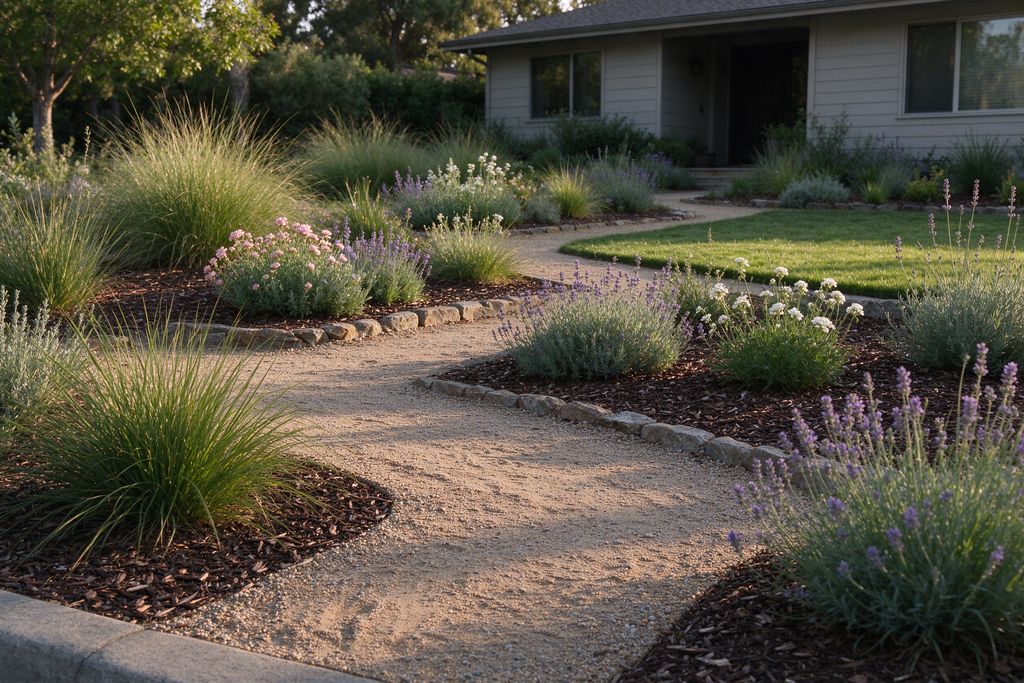
The best replacement plants are those suited to your region's rainfall, soil and winter lows. Your county extension office, local native plant society or water utility often publishes regional plant lists. Group plants by water need so each drip zone can be set for one group.
- Groundcovers that handle light foot traffic for paths and edges.
- Ornamental and native grasses for movement and structure.
- Flowering perennials and shrubs for pollinators and seasonal color.
- Permeable paths of gravel, decomposed granite or stepping stones.
- Mulch over all bare soil to hold moisture and suppress weeds.
New plants still need regular water for their first season or two while roots establish, then far less. A smart controller with separate drip zones handles this well; see the irrigation and smart controller guide. Weighing synthetic turf for part of the yard instead? Read natural grass vs artificial turf first, then check whether your local program accepts it.
Questions People Ask
Does every city have a turf replacement rebate?
No. These programs are most common in drought-prone regions and are run by local water utilities, water districts or cities. Availability, amounts and rules change, sometimes yearly, so check your local water utility directly.
Can I remove my lawn first and apply later?
Usually not. Many programs require you to apply and get approval before any grass is removed, often with photos of the existing lawn. Removing it first can make you ineligible.
Does artificial turf qualify for lawn rebates?
It depends on the program. Many exclude synthetic turf, and some cities restrict it. Read the eligible materials list before you design.
What is sheet mulching?
A way to kill and remove a lawn without a sod cutter or herbicide: the grass is mowed short, covered with overlapping cardboard, wetted and topped with a thick layer of mulch. Over several weeks or months the grass dies and breaks down under the cover.
Do I have to remove all of my lawn?
No. Many homeowners keep a smaller, well-watered lawn where people actually use it, and replace the rest. Some programs set a minimum area for a rebate.
What happens to my sprinklers?
Spray heads in converted areas are usually capped or converted to drip irrigation for the new plants. Some programs require that. Leaving overhead sprays running on new beds wastes water.