
Sod is grass grown on a farm, cut into strips with a thin slab of soil and roots, and rolled for delivery. Laid properly, it roots into the soil below within a few weeks. Laid badly, it sits on top of the ground like a carpet, dries out at the edges and shrinks apart. The difference is almost all preparation.
Choosing the Right Sod for Your Yard
Grass types split into two families. Cool-season grasses such as Kentucky bluegrass, tall fescue and perennial ryegrass grow best in spring and fall and are common across northern states and higher elevations. Warm-season grasses such as bermudagrass, zoysia, St. Augustine and centipede thrive in heat and are common across the South. A transition zone in between can grow either, with trade-offs.
| Grass | Family | Strengths | Watch for |
|---|---|---|---|
| Kentucky bluegrass | Cool-season | Spreads by rhizomes, repairs itself | Higher water needs, weak in shade |
| Tall fescue | Cool-season | Deep roots, more heat and shade tolerance | Bunch-type, slower to fill bare spots |
| Bermudagrass | Warm-season | Heat, wear and drought tolerance | Poor in shade, brown when dormant |
| Zoysia | Warm-season | Dense, fairly wear tolerant | Slow to recover once damaged |
| St. Augustine | Warm-season | Better shade tolerance among warm types | Less cold tolerant |
Local sod farms grow what suits their region, which is a useful filter. Ask what they cut fresh and when.
Preparing the Soil Properly
Start with a soil test through your county cooperative extension office or a private lab. It tells you pH and nutrient levels, which decide whether you need lime, sulfur, phosphorus or compost. Adding fertilizer without a test is guesswork.
Remove the old lawn completely. A rented sod cutter slices it off in strips; for small areas a flat spade works. Then correct the grade. Water should move away from the house and not collect in the middle of the yard. Rake out rocks and roots, loosen compacted soil several inches deep and work in amendments.
Clay soil that has been driven on by construction equipment is the classic trap. It looks fine raked smooth, but water sits on it and sod roots stall. If a screwdriver will not push in easily when the soil is moist, the area needs deeper loosening and organic matter before sod goes down.
Finish by firming the bed. A half-filled lawn roller or a good soaking settles loose soil so the sod does not sink unevenly later. The finished soil should sit about an inch below sidewalks, edging and sprinkler heads, so the sod ends up flush.
Laying the Rolls Without Gaps
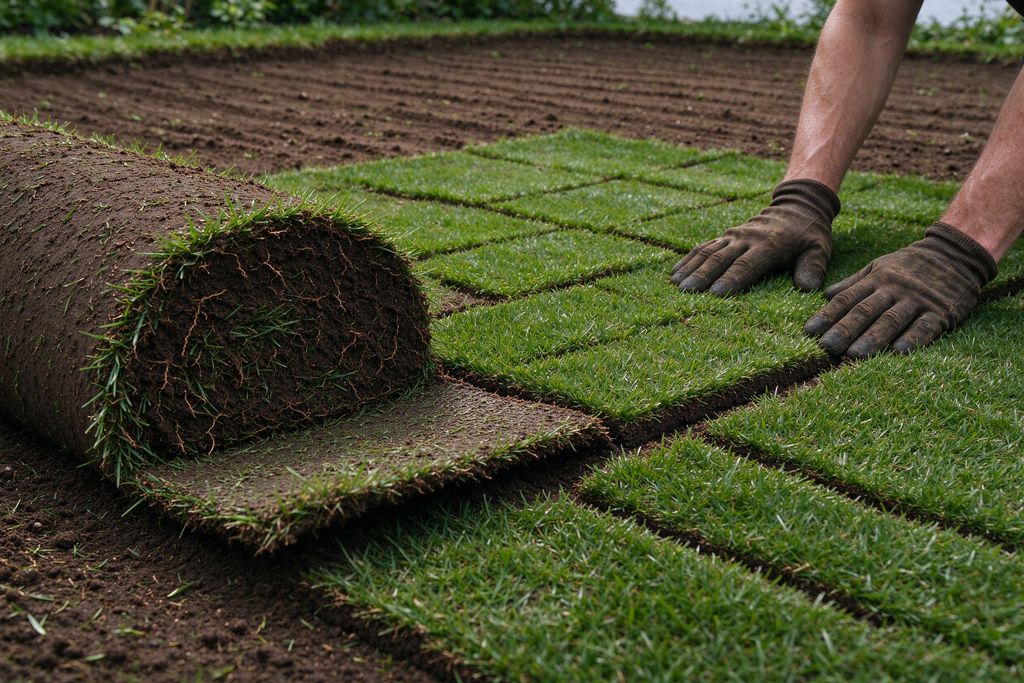
- Start straight. Lay the first row along the longest straight edge, such as a driveway or patio.
- Butt, do not stretch. Push each roll tight against the last. Stretched sod shrinks back as it dries and opens gaps.
- Stagger the seams. Offset the ends in each row like brickwork so no long seam lines up.
- Cut with a sharp knife. Trim around beds, curves and sprinkler heads instead of folding sod over.
- Work off boards. Kneel on plywood on freshly laid sod to spread your weight.
- Lay slopes across. On slopes, run rows across the hill and stake rolls if needed until they root.
Once a section is down, roll it with a lawn roller to press the roots into contact with the soil, then water that section before moving on in hot weather.
Watering Through the First Weeks
The first watering is the heaviest. Soak until the soil beneath the sod is wet several inches down; lift a corner to check. For the first week or so the goal is keeping the thin soil layer and the ground beneath it from drying out, which in hot weather can mean watering more than once a day. Edges and seams dry fastest.
As the sod knits to the soil, usually over two to three weeks in the growing season, shift to deeper and less frequent watering so roots grow down rather than staying near the surface. If you have an irrigation system, our irrigation and smart controller guide covers setting zones for establishment and then for maintenance.
the seams are turning brown,
water more often and check those spots for gaps or high soil.
the sod feels squishy and smells sour,
you are overwatering; let it dry slightly between cycles.
a corner lifts with no resistance after three weeks,
keep watering steadily and look for soil or grade problems underneath.
Sod Readiness Checklist
Tick through this before the delivery truck arrives. Your progress is saved in this browser.
Ready 0 / 8
Not sure whether sod or another surface fits your yard? Start with natural grass vs artificial turf, or describe the space through the project inquiry form.
Questions People Ask
How soon should sod be installed after it arrives?
As soon as possible, ideally the same day. Sod is cut with a thin layer of soil and roots and starts to heat up and dry out on the pallet. Keep pallets in shade and lay the rolls the day they arrive.
How often should new sod be watered?
Heavily within the first half hour of laying, then often enough that the soil under the sod stays moist, which in warm weather can mean more than once a day for the first week or so. Over the following weeks, water less often but more deeply so roots chase the moisture down.
When can I walk on new sod?
Keep traffic off it for roughly the first two weeks, apart from moving hoses. Footprints on soft, wet sod leave dents and break new roots.
When is the first mow?
Once the sod has rooted, which you can check by gently lifting a corner. If it resists, it has knitted to the soil. That often happens in two to three weeks in the growing season. Mow high with a sharp blade and never take more than about a third of the leaf.
Can sod be laid on top of old grass?
It is a common shortcut and a common failure. The old turf decomposes, leaves gaps and stops the new roots reaching soil. Remove the old lawn first.
What is the best time of year to lay sod?
When the grass type is actively growing and temperatures are moderate. Cool-season grasses usually establish best in late summer to early fall or in spring; warm-season grasses from late spring into summer. Your county extension office will have local timing.