
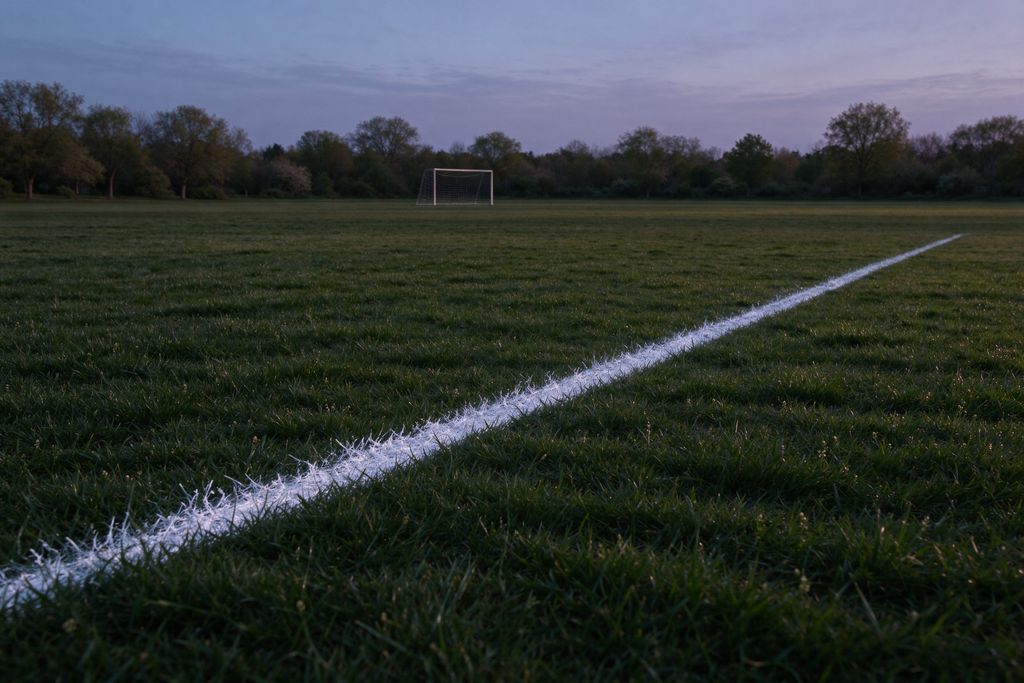
Sports and play turf is a different problem from an ornamental lawn. A front lawn is judged by how it looks; a playing surface is judged by how it behaves under feet, cleats, knees and falls, and by how quickly it comes back after hard use. That shifts the priorities from color to soil structure, grass type, drainage and cushioning.
Start With How Much Use It Gets
Everything flows from use. A backyard where two kids kick a ball after school is nothing like a community field hosting games every weekend. Before picking a surface, estimate hours of use per week, which seasons matter most and whether the area can rest.
use is light and the area can rest between sessions,
a well-built natural lawn of a wear-tolerant grass usually copes.
use is heavy every week through the growing season,
natural turf needs a sand-based root zone, drainage and an aggressive care program.
use is heavy year round and rest is impossible,
a synthetic system often makes sense, with planned infill and cleaning.
the area sits under play equipment,
treat it as a fall-protection surface first and a lawn second.
Natural Sports Turf
Natural fields that hold up to heavy play share a few features. The root zone drains fast, often because it is built with a high sand content that resists compaction. The surface is crowned or graded so rain moves off. And the grass is chosen for recovery as much as for looks.
Grass choices
- Bermudagrass is common on warm-climate fields thanks to its wear tolerance and fast lateral growth.
- Kentucky bluegrass spreads by underground rhizomes and repairs damaged areas in cool climates.
- Perennial ryegrass germinates fast and is often used to overseed worn areas or to add winter color to dormant warm-season fields.
- Tall fescue has deep roots and good heat tolerance, but as a mostly bunch-type grass it fills divots slowly.
Native clay soil under a heavily used field almost always compacts, drains slowly and turns to mud at the goal mouths. If a natural field is going to see serious play, budget for the root zone and drainage, not just the grass on top.
Synthetic Turf Systems
A synthetic field is a system with layers: a graded and compacted aggregate base, often a drainage layer, sometimes a shock pad, the turf carpet and the infill. Changing any one layer changes how the field plays.
| Infill | Strengths | Trade-offs |
|---|---|---|
| Silica sand | Inexpensive, stable, ballasts the turf | Little cushioning; can compact |
| Coated sand | Rounded grains, some products treated for pet areas | Still firm compared with rubber |
| Crumb rubber | Cushioning and resilience under play | Gets hot in sun; some owners avoid it |
| Organic (cork, coconut) | Runs cooler when damp | Needs moisture and more frequent top-ups |
Shock pads under the turf add cushioning that does not depend on infill depth and can extend the useful life of the system. For public or school fields, owners commonly measure surface hardness with a Gmax test over the life of the field.
Play Areas and Fall Zones
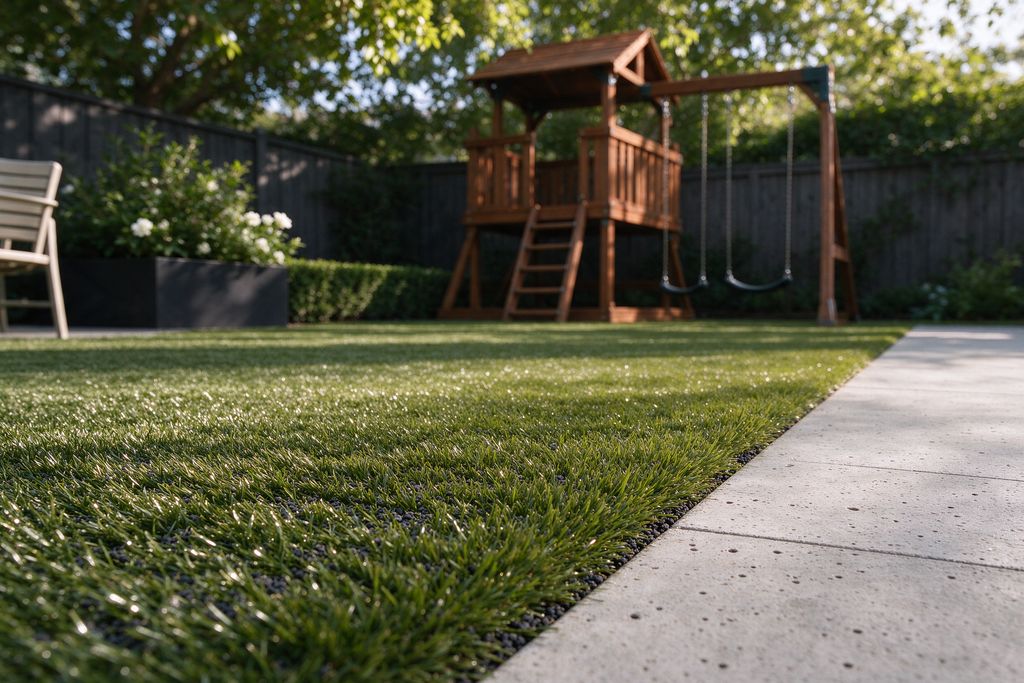
Around swings, slides and climbers, the surface has one main job: soften falls. In the US, playground surfacing is commonly tested to an ASTM standard that rates it for a critical fall height. Turf alone is generally not rated; turf over an engineered shock pad can be. If you are installing turf under backyard play equipment, ask the supplier which fall height the full system has been tested for and compare it with the tallest platform on the equipment.
Away from the equipment, the same comfort questions from our grass versus turf comparison apply: surface heat on summer afternoons, drainage after rain and cleanliness if pets share the space.
Keeping a Play Surface in Shape
Natural turf
Aerate compacted areas, overseed worn zones and move portable goals so wear spreads out. Our aeration and overseeding guide covers timing. Irrigation needs to be steady enough for recovery without leaving the surface soft and slick at game time.
Synthetic turf
Brush regularly to keep fibers upright and infill evenly spread, remove debris, check seams and edges, and top up infill in high-traffic zones. Ask any installer for a written care schedule and for how they recommend checking surface hardness over time.
Planning a backyard field or a play area? Describe it on the project inquiry form, including how it is used and by whom.
Questions People Ask
Is artificial turf safe under a swing set?
Turf on its own is not a fall-protection surface. Under play equipment it needs a shock pad or other cushioning system tested for the fall height of that equipment. Ask for the test results for the full system, not just the turf.
What grass holds up best to kids and sports?
In warm climates, bermudagrass is widely used on athletic fields for its wear tolerance and fast recovery. In cool climates, Kentucky bluegrass is valued because it spreads and repairs itself, often mixed with perennial ryegrass for quick establishment.
What is infill and which kind is best?
Infill is the granular material brushed between synthetic fibers to keep them upright and add cushioning. Options include sand, coated sand, crumb rubber and organic materials such as cork or coconut fiber. Each differs in heat, cushioning, odor and maintenance, so match it to how the area is used.
What is a Gmax test?
It is a measure of how hard a surface is when something hits it, used to check athletic fields. Lower numbers mean more cushioning. Field owners often test periodically because synthetic fields and natural fields both get harder over time.
How do I stop a backyard goal mouth from wearing out?
On grass, rotate where goals and nets sit, overseed worn areas every year and core-aerate compacted spots. On synthetic turf, check and top up infill in high-traffic zones more often than the rest.